Electronic Grade Low-Chlorine High-Purity Bisphenol F Epoxy Resin Series (BPF Epoxy Resin)
Developed independently by Shanghai Feimi Material Technology Co., Ltd., our low-chlorine, high-purity Bisphenol F (BPF) epoxy resins are engineered for high-precision electronic packaging, semiconductor encapsulation, electronic-grade structural adhesives, and advanced aerospace and wind power composites. In microelectronics and advanced composite manufacturing, conventional Bisphenol A (BPA) epoxy resins are often limited by high viscosity, restricting high-ratio loading of inorganic conductive or flame-retardant fillers (such as silica powder or alumina). Furthermore, residual free chlorine ions from standard synthesis can migrate under heat, moisture, and electrical fields, causing electrochemical corrosion and circuit shorts. Utilizing proprietary synthesis and advanced dechlorination processes, Feimi Material strictly controls total chlorine and hydrolyzable chlorine to ultra-low levels, ensuring exceptional dielectric reliability. With a significantly lower initial viscosity than BPA resins, our BPF series guarantees rapid wet-out of high-gsm fiber reinforcements and excellent processing flowability in high-filler formulations, forming a dense, heat-resistant, and chemically inert protective matrix once cured.
Typical Performance Specifications:
| 产品名Product | EP-HF1 |
|---|---|
| 外观 Appearance | 无色透明液体 Transparent liquid |
| 色泽(APHA) Color | <30 |
| 环氧当量(g/mol) EEW | 155~165 |
| 粘度(25℃,mPa.s) viscosity | 900~1500 |
| 水解氯(ppm) Hydrolyzed chlorine | <=300 |
| 总氯(ppm) Total chlorine | <900 |
| 挥发物% Volatiles | <0.2 |
Key Product Advantages
- Ultra-Low Ionic Impurities for Uncompromising ReliabilityAdvanced dechlorination technology keeps hydrolyzable and total chlorine at trace levels, eliminating ionic migration under moisture and electrical stress to prevent electrochemical corrosion and short circuits in sensitive microelectronics.
- Low Viscosity & High Fluidity for Maxed-Out Filler LoadingViscosity is 50%
- lower than equivalent Bisphenol A resins, enabling higher loading ratios of inorganic fillers (like silica or alumina) for low CTE, flame-retardant, or high-thermal-conductivity formulations without sacrificing pourability and flow.
- High Crosslink Density with Superior Heat & Mechanical ResistanceForms a dense 3D crosslinked network upon curing, imparting a higher glass transition temperature (Tg), exceptional tensile/flexural strength, and outstanding dimensional stability under severe thermal cycling.
- Outstanding Chemical Resistance & Anti-Hydrothermal AgingDemonstrates extreme chemical inertness against strong acids, bases, organic solvents, and moisture. Extremely low water absorption ensures zero bubbling, blistering, or delamination in accelerated salt-spray and damp-heat testing.
Product Applications
- Semiconductor & Microelectronics Packaging: Formulation of underfill materials, epoxy molding compounds (EMC), IC potting compounds, and die-attach adhesives.
- High-Density Printed Circuit Boards (PCB & CCL): Manufacturing of high-performance copper-clad laminates (CCL) and multi-layer board impregnation resins requiring high-frequency insulation and peel strength.
- Advanced Composite Matrices: High-strength resin matrix for aerospace structural parts, wind turbine blade main spars, and high-performance carbon fiber/glass fiber filament winding and pultrusion processes.
- Specialty Electronic Structural Adhesives: High-reliability structural bonding, optical component bonding, high-temperature AB adhesives, and thermally/electrically conductive adhesives.
- High-Performance Protective Coatings: Heavy-duty marine anti-corrosion coatings,
Handling precautions:
- For specific safety operations, refer to the MSDS document
- It's recommended to perform process validation before use (e.g., curing curve test)
FAQ
- Q1: Why is "low chlorine, high purity" Bisphenol F epoxy resin essential for semiconductor encapsulation and electronic potting adhesives?A: Standard industrial epoxy resins retain trace levels of free and hydrolyzable chlorine from the epichlorohydrin synthesis. In operating electronic devices, moisture ingress reacts with residual chlorine ions to form micro-acidic environments. Under electrical fields, these ions migrate and corrode delicate gold or aluminum bond wires, leading to elevated electrical resistance or catastrophic circuit failure. Ultra-low chlorine BPF resin eliminates this root cause, ensuring long-term product reliability.
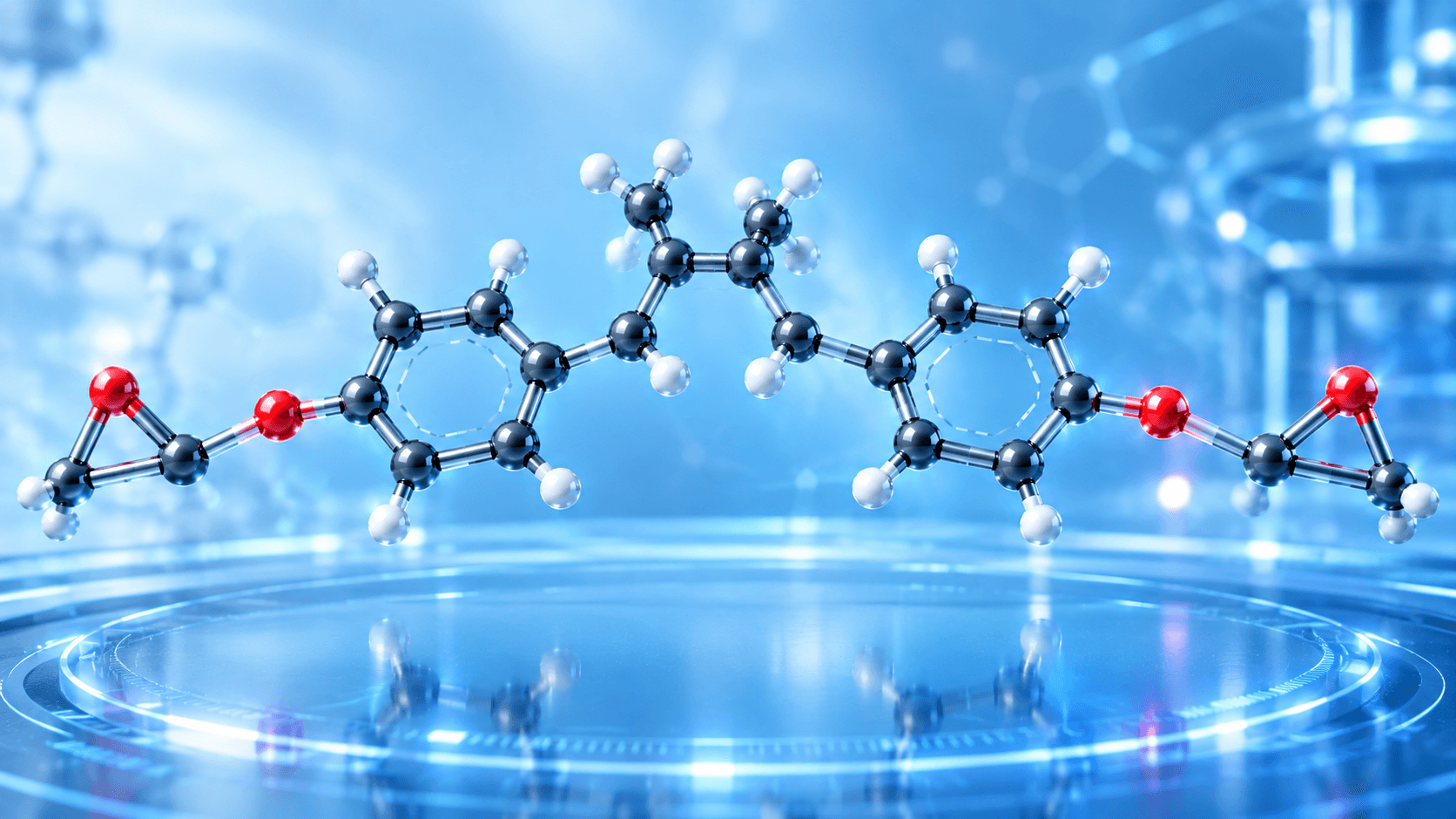
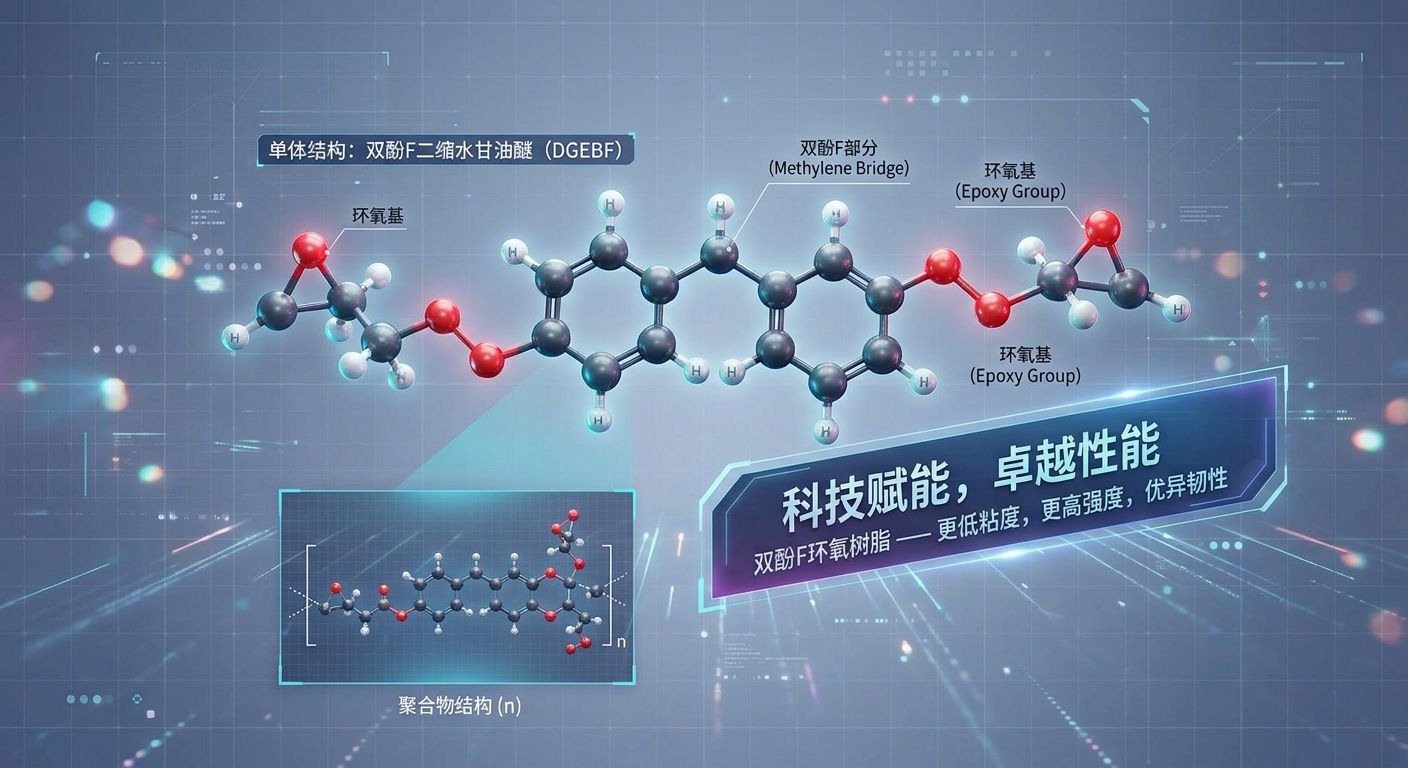
- Q2: What are the primary advantages of Bisphenol F epoxy resin (BPF) over conventional Bisphenol A epoxy resin (BPA)?A: Bisphenol F lacks the two central methyl groups found in Bisphenol A. This structural difference offers two major technical benefits: significantly lower viscosity (typically 1/3 to 1/2 that of BPA resin), which dramatically improves fiber wet-out speeds and filler loading capacities; and higher crosslink density with lower crystallization tendency, yielding superior solvent resistance, mechanical toughness, and thermal performance.
- Q3: Can Shanghai Feimi Material customize BPF epoxy resins for specific chlorine thresholds or custom viscosity requirements?A: Yes. Feimi Material operates dedicated R&D and purification facilities. We can tailor specifications to meet your target parameters, such as hydrolyzable chlorine caps (<100 ppm or custom limits), specific viscosity ranges, or custom blending with cycloaliphatic or novolac epoxy resins to suit your exact processing needs.